


You train hard. You compete or stay active because you love it. Then an injury or a stubborn plateau gets in the way. Maybe you have already tried physical therapy and found yourself doing generic exercises, sharing a clinician with other patients, or being handed off to an aide halfway through your session. That experience is frustrating, especially when all you want is to get back to your sport.
Performance physical therapy is built differently. This guide explains what it is, who it helps, how testing and treatment work, and what to look for in a clinic. If you live in Henrico or the greater Richmond area, Adams Performance was designed for exactly this need.
What Is Performance Physical Therapy?
Performance physical therapy is an approach to rehabilitation that treats you as an athlete, not just a patient with a diagnosis. The goal is not only to reduce pain. It is to restore the strength, mobility, power, and movement quality your sport or lifestyle demands, then build on it so you are less likely to get hurt again.
Traditional physical therapy often focuses on getting you back to basic daily function. That is valuable, but it may stop short of what a sprinter, pitcher, golfer, or distance runner actually needs. Performance care picks up where basic recovery ends.
How It Differs From Traditional Rehab
A performance-based approach looks at the demands of your activity and works backward. A shoulder problem in a baseball pitcher, for example, calls for a different plan than the same diagnosis in an office worker who lifts on weekends.
Key differences include:
- Objective testing that measures strength, power, and movement rather than relying only on how you feel
- Exercise progressions that move from basic control to plyometrics and sport-specific drills
- A plan that connects rehab, return-to-sport testing, and strength and conditioning
- Attention to the root cause of your problem, not only the painful area
The Goals of Performance Care
At Adams Performance, the goals are straightforward: restore function, improve performance, reduce your risk of reinjury, and help you return to your sport with confidence. Those goals apply whether you are recovering from an injury, preparing for surgery, or simply trying to move better.

Who Benefits From Performance Physical Therapy?
You do not need to be a professional athlete to benefit. Performance physical therapy serves anyone who asks a lot of their body and wants it to respond.
Competitive and Recreational Athletes
Youth, high school, college, and professional athletes all face sport-specific stresses. So do adult league players, weekend competitors, and gym athletes. If you throw, sprint, jump, swing, lift, or cut, your body is absorbing repeated load that generic exercises rarely address.
Runners and Endurance Athletes
Running places repeated impact on your feet, knees, hips, and spine. Small inefficiencies in your form can add up over hundreds of miles. A Certified Running Gait Analyst on staff can assess how you move and connect what they observe to pain, performance, or injury history.
Golfers
Golf looks gentle, but the swing demands rotation, hip mobility, and trunk control. Titleist Performance Institute (TPI) Level 1 providers use golf-specific assessment to identify physical limitations that may affect your swing and contribute to back, hip, shoulder, or elbow pain.
Active Adults
If you stay active and want to keep doing so, performance care helps with mobility, posture improvement, strength building, and injury prevention. You do not have to wait until something hurts to start.
Why One-on-One Care With a Doctor of Physical Therapy Matters
When you feel you are not getting results, the problem is often how care is delivered. In many clinics, a patient may see a Doctor of Physical Therapy briefly, then spend the rest of the visit with an aide or assistant, or share the clinician’s attention with other patients.
Adams Performance takes a different approach. Your sessions are one-on-one, exclusively with a Doctor of Physical Therapy. There are no techs, no double booking, and no handoffs.
What This Means for Your Recovery
When the same expert evaluates, treats, and progresses you every visit, nothing gets lost in translation. Your clinician sees how you respond to each technique and adjusts in real time.
That level of focus is a major reason most patients reach their goals in far fewer visits than traditional clinics typically require. Individual results vary based on your condition and goals, but fewer, higher-quality visits is the aim of this model.
Clinicians Who Understand Sport
The clinicians at Adams Performance are former competitive athletes. They have felt the pressure of a season on the line and know what it means to be told to rest when you want to play. That perspective shapes how they set expectations, build timelines, and communicate with you throughout your care.
How Testing Guides Your Treatment Plan
Pain tells part of the story. Objective testing tells the rest. Performance physical therapy uses measurements to find what is limiting you and to confirm when you are ready to progress.
Movement and Gait Assessments
These evaluations show how you actually move:
- Movement Screen and Functional Movement Assessment: Identify limits in mobility, stability, and control that may contribute to injury or hold back performance.
- Running Gait Analysis and Running Form Assessment: Examine your stride, cadence, and mechanics to find inefficiencies or sources of excess stress.
- TPI Testing: Screens the physical qualities tied to an efficient golf swing.
Strength and Power Testing
Some limitations cannot be seen by eye. Objective tools help reveal them:
- Force Plate Testing: Measures the forces you produce and absorb during movements such as jumping and landing, which can reveal asymmetries between sides.
- VALD Testing: Provides measurable data on strength and performance that can be tracked over time.
- Isokinetic and Dynamometer Testing: Measures muscle strength and output so deficits can be identified and compared side to side.
Return-to-Sport Testing
Feeling better is not the same as being ready. Return-to-sport testing compares your strength, power, and movement quality against objective benchmarks before you return to full competition. Research on ACL rehabilitation has linked meeting return-to-sport criteria with a lower risk of reinjury, which is why criteria-based decisions matter more than a calendar date.
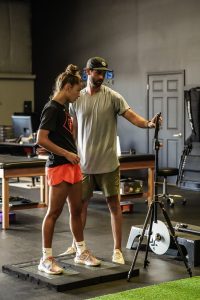
Hands-On Treatments and Training Methods
Once your clinician understands what is driving your problem, treatment combines hands-on care with active training. Pain relief creates the window. Exercise makes the change last.
Manual Therapy and Soft Tissue Techniques
Your Doctor of Physical Therapy may use techniques such as:
- Joint mobilization and manipulation
- Myofascial release and soft tissue mobilization
- Trigger point therapy
- Dry needling
- IASTM and Graston technique, along with scraping
- Cupping
These approaches address pain, tissue tightness, and restricted motion so that you can move and train more effectively. Your clinician selects them based on what your evaluation shows, not as a routine package.
Blood Flow Restriction Training
Blood Flow Restriction (BFR) training uses a specialized cuff to partially limit blood flow while you perform light resistance exercise. Research shows that BFR with low loads can improve muscle strength and size, making it useful when heavy loading is not yet appropriate, such as early in recovery after an injury or surgery.
Therapeutic Exercise, Neuromuscular Re-Education, and Plyometrics
Exercise is the foundation of lasting results. Your program may include:
- Therapeutic exercise to build strength, mobility, and endurance
- Neuromuscular re-education to improve control and coordination of the movements your sport requires
- Plyometrics and return-to-sport progressions to rebuild explosive power, landing mechanics, and change of direction
Supportive options such as athletic taping and compression therapy, including Normatec, may also be used to support your recovery between sessions.
Conditions Treated in Athletes and Active Adults
Adams Performance treats a broad range of injuries and pain conditions common in sport and active life. If you are unsure whether your issue fits, a Discovery Call is a simple way to find out.
Spine and Upper Body
- Low back pain, mid back pain, and sciatica
- Neck pain
- Shoulder pain, rotator cuff pain or tears, shoulder impingement, and frozen shoulder
- Tennis elbow, golfer’s elbow, and other elbow pain
- Wrist pain, carpal tunnel, and hand or finger pain
Hip, Knee, and Lower Leg
- Hip pain, hip impingement (FAI), and labral tears
- Knee pain, runner’s knee, meniscus injuries, and IT band syndrome
- ACL injuries, including rehab after surgery
- Hamstring strains and groin pain
Foot, Ankle, and Whole-Body Concerns
- Achilles tendinopathy and plantar fasciitis
- Ankle sprains and shin splints
- Tendonitis, tendinopathy, arthritis, and overuse injuries
- Headaches, migraines, and temporomandibular joint (TMJ) pain
Because Virginia is a direct access state, you do not need a physician referral to schedule an evaluation.
From Injury Rehab to Return to Sport and Beyond
One of the biggest gaps in traditional care is what happens when pain fades. Many patients are discharged too early, with strength and movement still below what their sport requires. That gap is where reinjury often begins.
A Continuous Path Instead of Separate Steps
At Adams Performance, rehab, testing, and training connect in one continuum. You move from calming symptoms to rebuilding strength and control, through return-to-sport testing, and into strength and conditioning that prepares you for competition.
This structure supports a range of outcomes:
- Return to sport and return to running
- Injury prevention and preseason prehab
- Strength building and improved mobility and flexibility
- Posture improvement
- Post-surgery rehabilitation
Prehab and Injury Prevention
Waiting for an injury is not the only way to start. If a movement screen reveals a weak link before your season begins, you can address it early. Prehab is especially useful ahead of a planned surgery, when building strength and mobility beforehand can support your recovery afterward.
Why Henrico Athletes Choose Adams Performance
Choosing a clinic is a decision about trust. Athletes and families across Henrico and Richmond choose Adams Performance for several reasons:
- Individual attention: Every visit is one-on-one with a Doctor of Physical Therapy.
- Athletic credibility: The clinic is trusted by athletes from MLB organizations, college programs, and local high schools.
- Proven satisfaction: A 5.0 Google rating across more than 159 reviews.
- Specialized skill: A Certified Running Gait Analyst and TPI Level 1 providers on staff.
- Advanced tools: Dry needling, BFR, IASTM, Graston, cupping, and detailed performance testing.
You can learn more about the team on the About page or explore the full list of physical therapy services.
How to Get Started With Performance Physical Therapy in Henrico
Starting is simpler than most people expect. There is no referral to chase and no commitment required to ask questions.
What to Expect
- Discovery Call: A free 15-minute, no-obligation conversation about your injury, your sport, and your goals.
- Evaluation: A detailed assessment with your Doctor of Physical Therapy, including movement testing when appropriate.
- Individualized plan: Hands-on treatment, targeted exercise, and clear next steps toward your goal.
If you are tired of generic rehab and ready for care built around how you move and compete, Adams Performance is ready to help. Book your free Discovery Call today and take the first step toward getting back to your sport stronger and more prepared than before. Visit the Adams Performance home page to get started.