


Overhead athletes—such as baseball pitchers, tennis players, swimmers, and volleyball players—place unique demands on their shoulders, arms, and core. The repetitive nature of overhead movements increases the risk of shoulder injuries, muscle imbalances, and movement inefficiencies that can limit performance and lead to long-term damage.
To stay at the top of their game, overhead athletes need a well-structured strength and conditioning program that enhances power, improves mobility, and prevents injury. Simply increasing strength isn’t enough—athletes must also focus on shoulder stability, core strength, and mobility to maximize their performance while reducing the risk of strain or overuse injuries.
At Adams Performance, we specialize in training and rehabilitating overhead athletes, helping them build resilience through customized strength and conditioning programs. In this article, we’ll break down the key strategies to enhance performance and prevent injuries for athletes who rely on overhead movement.
Key Risk Factors for Overhead Athletes
Overhead athletes are at a higher risk of developing shoulder, elbow, and upper body injuries due to the repetitive nature of their movements. Without proper strength, mobility, and recovery, these athletes can experience chronic pain, instability, and reduced performance over time.
Common Injuries in Overhead Athletes
Some of the most frequent injuries seen in overhead sports include:
- Rotator Cuff Strains and Tears – Overuse of the shoulder muscles can lead to irritation, weakness, and even tears.
- Labral Tears – Excessive stress on the shoulder joint can cause damage to the labrum, leading to instability and pain.
- Shoulder Impingement – Tightness or muscular imbalances can cause compression of the tendons in the shoulder, limiting movement.
- Elbow Tendonitis (e.g., Tennis Elbow, Golfer’s Elbow) – Overuse can cause inflammation in the tendons, leading to discomfort and decreased grip strength.
Biomechanical Challenges and Muscular Imbalances
Overhead movements require a combination of mobility, strength, and stability across multiple joints. When certain muscles are overused while others remain weak, imbalances can develop, leading to compensatory movements and increased injury risk. Key challenges include:
- Weak Scapular Stability – Poor control of the shoulder blades can affect shoulder mechanics.
- Limited Thoracic Mobility – A stiff upper back can force the shoulder joint into improper positions, increasing strain.
- Core Instability – Weakness in the core and lower body can lead to inefficient force transfer, placing more stress on the shoulders and arms.
Understanding these risk factors allows athletes and coaches to design training programs that address weaknesses, correct imbalances, and minimize injury potential.
Building Shoulder Strength and Stability
For overhead athletes, shoulder strength alone is not enough—stability is equally important. A well-conditioned shoulder must be able to generate power while maintaining control, preventing excessive strain on the muscles and joints. Strengthening the rotator cuff, scapular stabilizers, and supporting muscles is essential for injury prevention and peak performance.
The Role of the Rotator Cuff and Scapular Stability
The rotator cuff is a group of four muscles responsible for stabilizing the shoulder joint during overhead movements. Weakness or imbalances in these muscles can lead to instability, poor mechanics, and an increased risk of tears or impingement. Additionally, the scapula (shoulder blade) plays a key role in shoulder movement, and poor scapular control can lead to dysfunctional movement patterns.
Key Strengthening Exercises for Overhead Athletes
A proper strength program should focus on both dynamic strength and joint stability. Some of the most effective exercises include:
- External and Internal Rotations with Bands or Dumbbells – Strengthens the rotator cuff to improve stability.
- Scapular Retractions – Enhances shoulder blade control, reducing strain on the shoulder joint.
- Prone Y-T-W-L Raises – Improves coordination of the upper back and shoulder muscles.
- Landmine Presses – Builds strength in a controlled overhead motion, reducing excessive shoulder strain.
- Turkish Get-Ups – Strengthens the entire shoulder complex while improving mobility and control.
By incorporating these exercises into a regular training routine, overhead athletes can reduce their risk of injury while building the strength needed for powerful, efficient movements.
Improving Mobility and Flexibility for Injury Prevention
While strength and stability are crucial for overhead athletes, mobility and flexibility play an equally important role in preventing injuries and optimizing performance. Without adequate range of motion in the shoulders, thoracic spine, and hips, athletes may develop compensatory movement patterns that increase strain on the body.
The Importance of Shoulder and Thoracic Mobility
A restricted thoracic spine (upper back) or tight shoulder joint can force athletes into inefficient movement patterns, increasing the risk of impingements, tendonitis, and muscular imbalances. Improving mobility in these areas helps:
- Enhance overhead reach for throwing, serving, and swimming strokes.
- Reduce strain on the rotator cuff and elbow by promoting proper movement mechanics.
- Improve posture and spinal alignment, leading to better force distribution.
Essential Mobility and Flexibility Drills
Incorporating mobility drills into a regular training routine can help maintain joint health and prevent stiffness. Recommended exercises include:
- Thoracic Spine Rotations – Improves spinal mobility for better shoulder movement.
- Wall Slides – Enhances shoulder range of motion while reinforcing proper scapular positioning.
- Sleeper Stretch – Helps maintain internal rotation of the shoulder joint, reducing the risk of impingement.
- Lat and Pec Stretching – Loosens tight muscles that can limit overhead movement.
- Banded Shoulder Dislocations – Improves overall shoulder mobility and flexibility.
By prioritizing both strength and mobility, overhead athletes can achieve a full range of motion, reduce injury risk, and improve movement efficiency for better performance.
Core and Lower Body Strength for Overhead Athletes
While overhead athletes rely heavily on their shoulders and arms, true power and stability originate from the core and lower body. A strong foundation allows athletes to generate force efficiently, maintain balance, and reduce excessive strain on the upper body.
The Role of Core Stability in Overhead Movements
The core acts as a link between the lower and upper body, helping to:
- Transfer power efficiently from the legs to the arms.
- Reduce stress on the shoulder and elbow by improving overall body control.
- Enhance rotational strength for throwing, swinging, and overhead motions.
Key core exercises for overhead athletes include:
- Pallof Presses – Builds anti-rotational strength to improve stability.
- Dead Bugs – Strengthens deep core muscles for better spinal control.
- Medicine Ball Rotational Throws – Enhances explosive power for sport-specific movements.
Lower Body Strength and Force Transfer
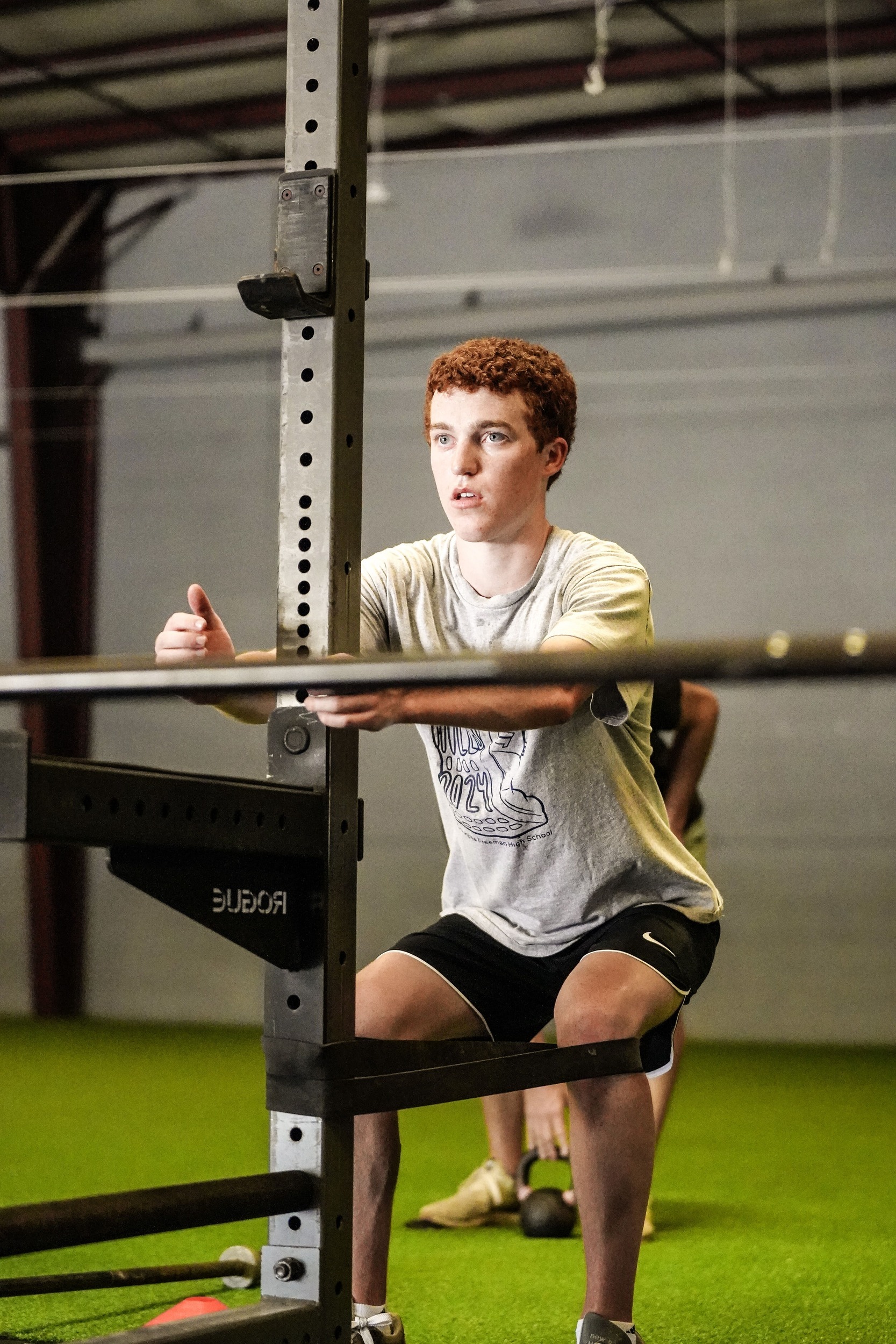
The legs and hips generate a significant amount of power in overhead movements. Without strong lower-body engagement, the arms and shoulders compensate, increasing injury risk. Important lower-body exercises include:
- Squats and Split Squats – Develop lower-body strength and stability.
- Hip Bridges and Romanian Deadlifts – Strengthen the posterior chain, reducing strain on the lower back.
- Single-Leg Balance Drills – Improve stability and control during dynamic movements.
By integrating core and lower-body strength training into a well-rounded program, overhead athletes can increase power, improve efficiency, and reduce unnecessary stress on their upper body.
Overhead athletes put immense strain on their shoulders, arms, and upper body, making strength, mobility, and stability training essential for both injury prevention and performance enhancement. A well-designed strength and conditioning program should focus on shoulder stability, mobility, core strength, and lower-body power to ensure that athletes can generate force efficiently while reducing the risk of overuse injuries.
At Adams Performance, we specialize in customized training programs for overhead athletes, helping them build strength, improve mobility, and enhance performance. Whether you’re recovering from an injury or looking to take your game to the next level, our expert coaches and physical therapists are here to support you.
Ready to optimize your performance and stay injury-free? Contact us today to schedule an evaluation and start training smarter.